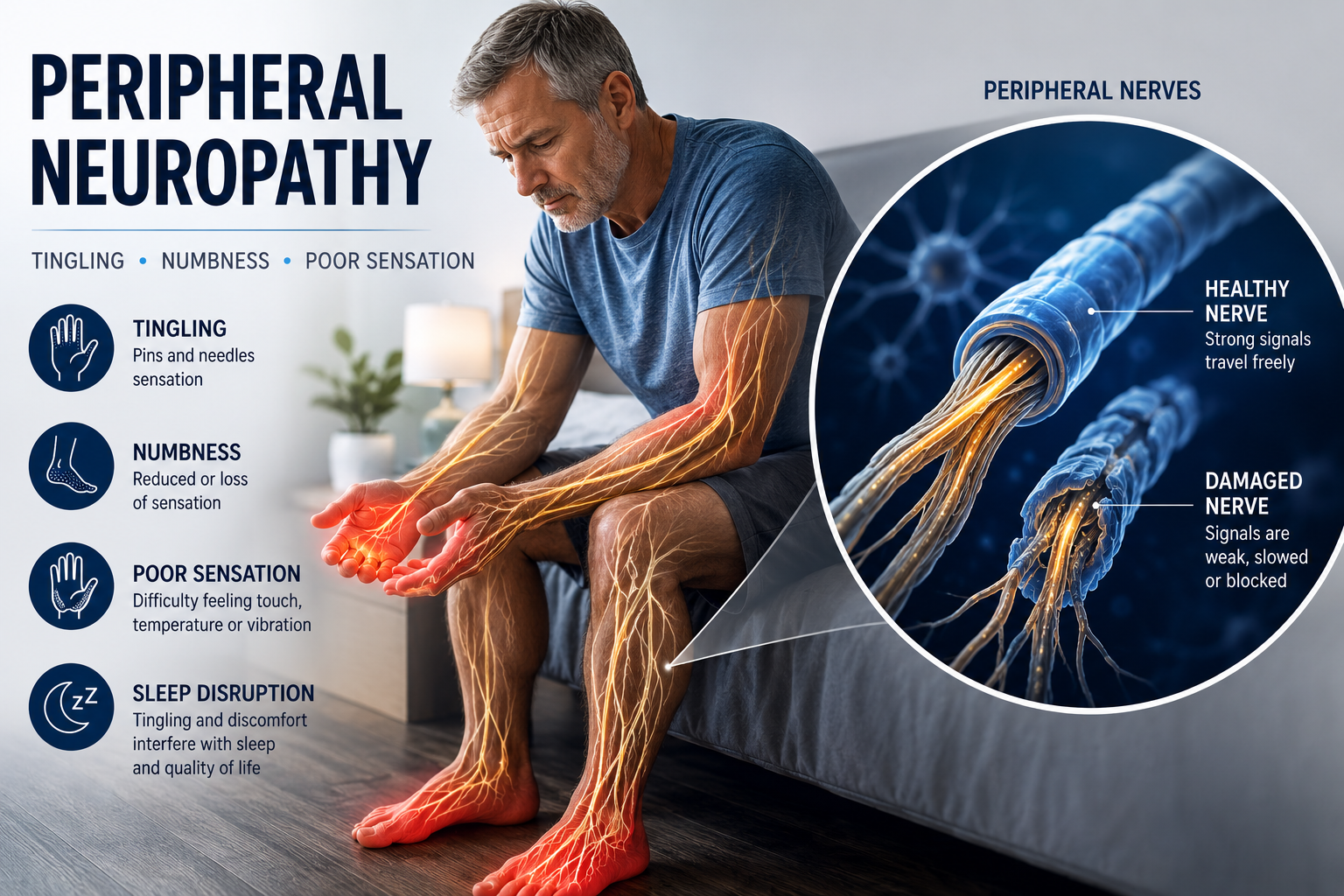
Tingling and poor sensation in his hands and feet bothered Robert for several months. It seemed to be getting worse. Lately, it had started to interfere with his sleep.
Robert had always had good health until he was involved in a severe fire at work. Four years before I met him he an accident at work gave him severe, 3rd degree burns over 37% of his body. He was given a 13% chance of survival, and spent 40 days in a coma, and 60 days in the ICU.
Robert is very tenacious, and he didn’t die. In fact, when we meet he tends to be upbeat and positive. The accident left him with scarring and chronic pain. He also gained a significant amount of weight. The weight led to prediabetes and hypertension.
Several years after the accident he began to feel tingling in his hands and feet. The tingling became bad enough that it interfered with his sleep.
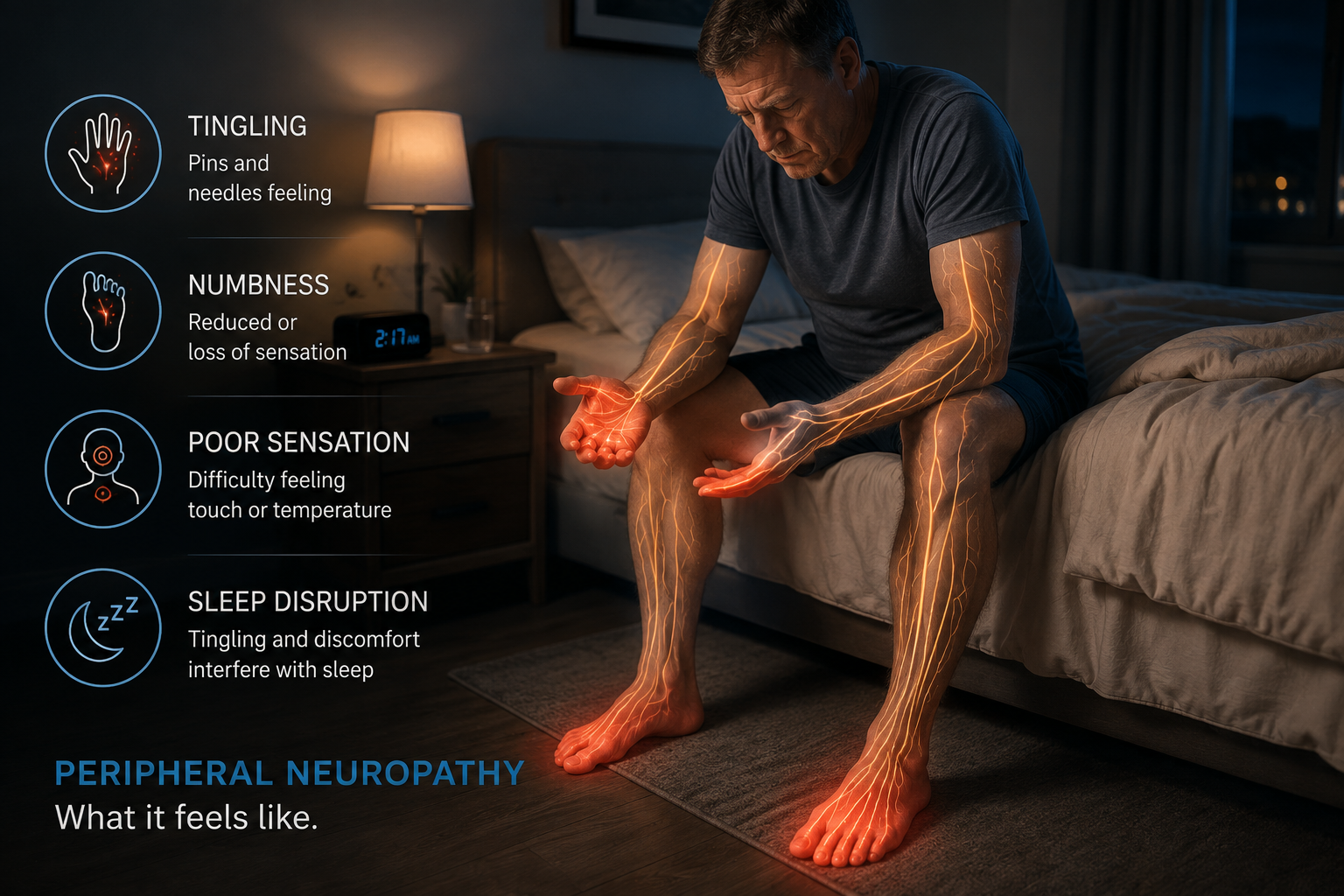 A realistic medical lifestyle image of an adult man experiencing tingling and decreased sensation in his hands and feet, with subtle illuminated nerve pathways highlighting the affected areas.
Tingling in hands and feet, loss of sensation, and pain are common signs of peripheral neuropathy. Peripheral neuropathy is fairly common, affecting approximately 2% of the general population, and 7% of the elderly. Diabetes is the most common cause, but pre-diabetes and insulin resistance also greatly increase the risk.
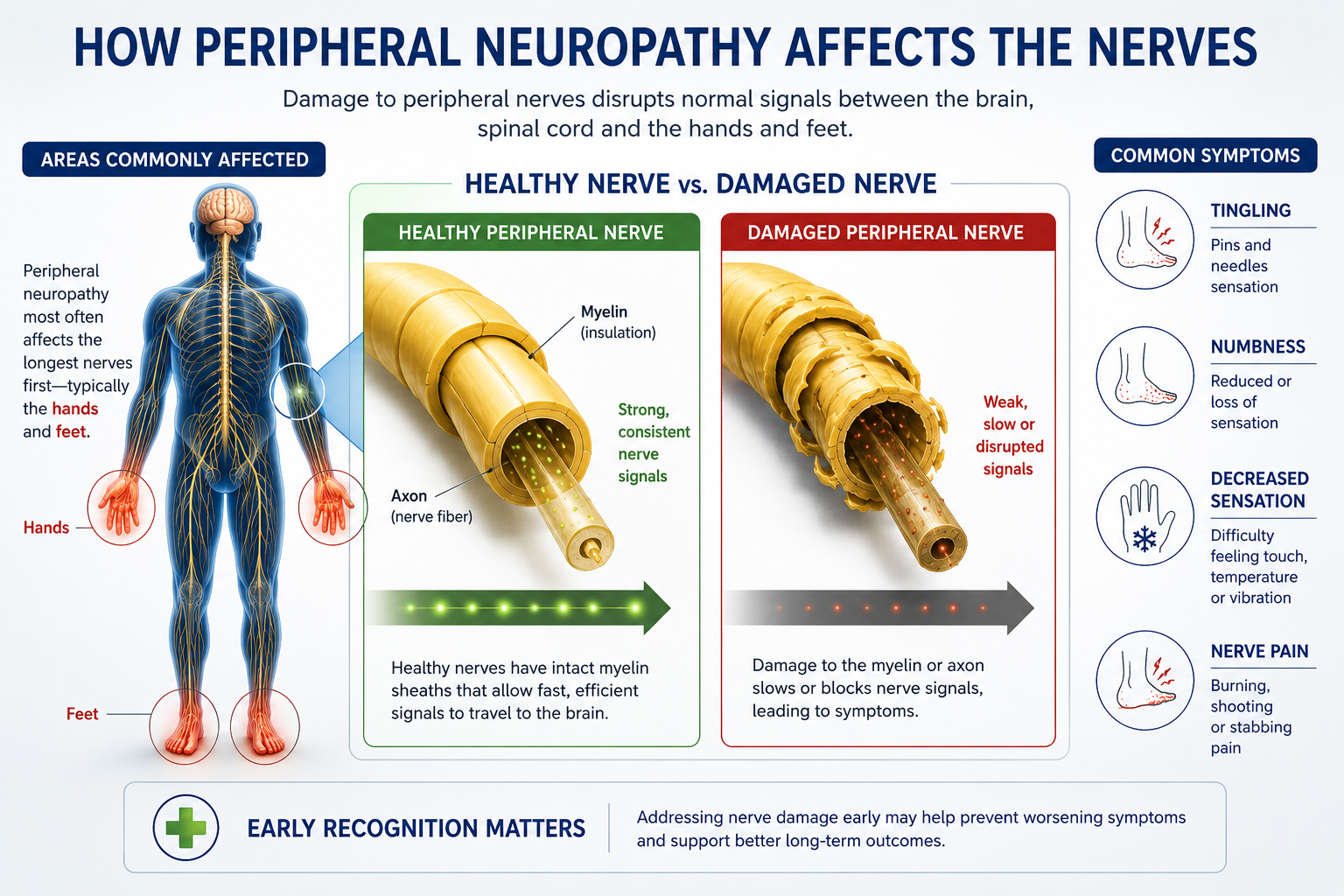 A detailed medical illustration comparing a healthy peripheral nerve with a nerve affected by peripheral neuropathy, showing disrupted nerve signaling and how it can cause tingling, numbness, decreased sensation, and pain in the hands and feet.
Tingling and loss of sensation are early signs, over time it can become worse and manifest as chronic pain.
I had known Robert for over a year when he first described these new symptoms to me. Peripheral neuropathy can be very difficult to treat, so we discussed several out-of-the-box treatment options.
After a full discussion we decided to attempt to treat his neuropathy symptoms with an IV infusion of exosomes.
Exosomes in our clinic are a stem cell product. Stem cells produce small, fluid filled vesicles, called exosomes. The exosomes have healing and regenerative properties. The exosomes we use in our clinic are derived from an umbilical cord source. The umbilical cord stem cells are grown in a culture, the exosomes are harvested and frozen, and used for regenerative medical procedures.
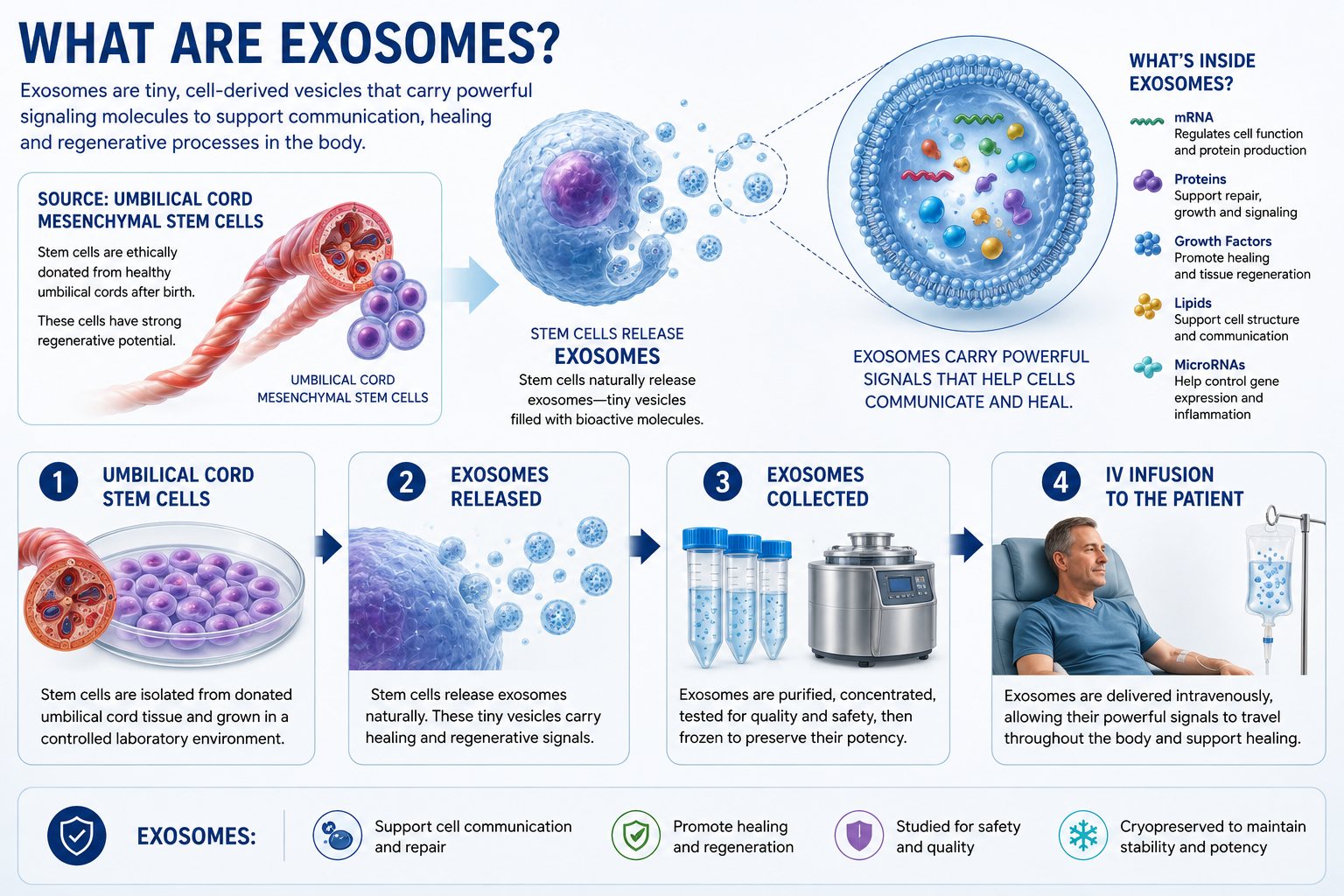 A medical infographic showing umbilical cord-derived stem cells releasing microscopic exosomes, with a magnified view of the small extracellular vesicles and their signaling contents.
After infusion into the body, or into a diseased area, the exosomes fuse with the cell membranes of other cells, and provide a strong signal for healing.
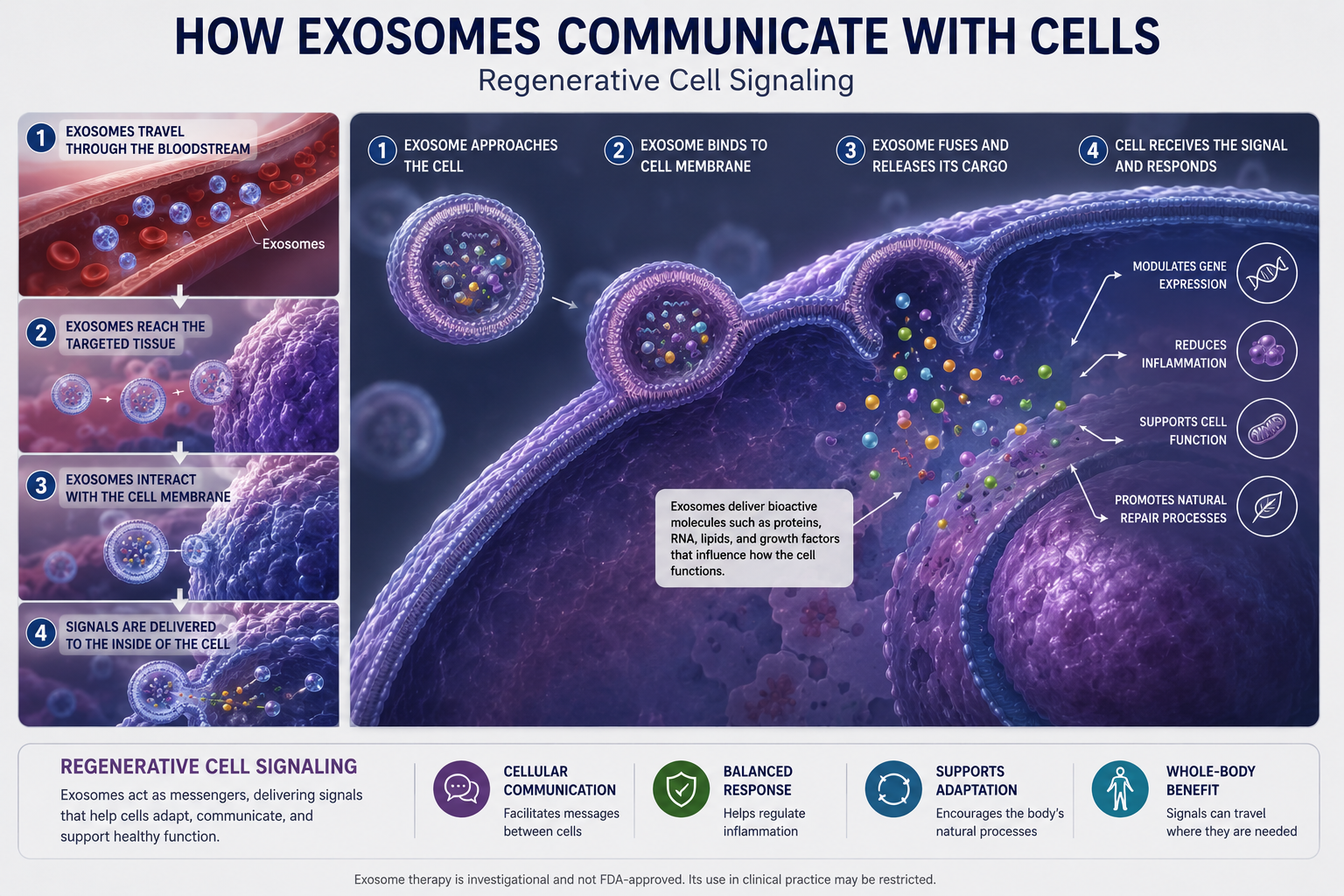 A cellular-level medical diagram showing exosomes interacting with recipient cells and delivering biological signaling molecules involved in cellular communication and regenerative processes.
Preclinical (animal studies) and early clinical data (human studies) show good response of neuropathy to IV infusion of exosomes. This is not a FDA approved therapy, and should be considered investigational; however, it has strong biological plausibility, and the animal and early human studies are strongly positive.
After a discussion with Robert about potential risks and benefits, we decided to move forward with an exosome infusion. He tolerated the initial infusion well.
At his follow-up 1 month later, he remarked that he had experienced a marked improvement in his neuropathy symptoms, and in his quality of life. Because exosomes give a healing signal that develops over time, I expect that this is only the beginning. He will likely continue to improve over the next several months.
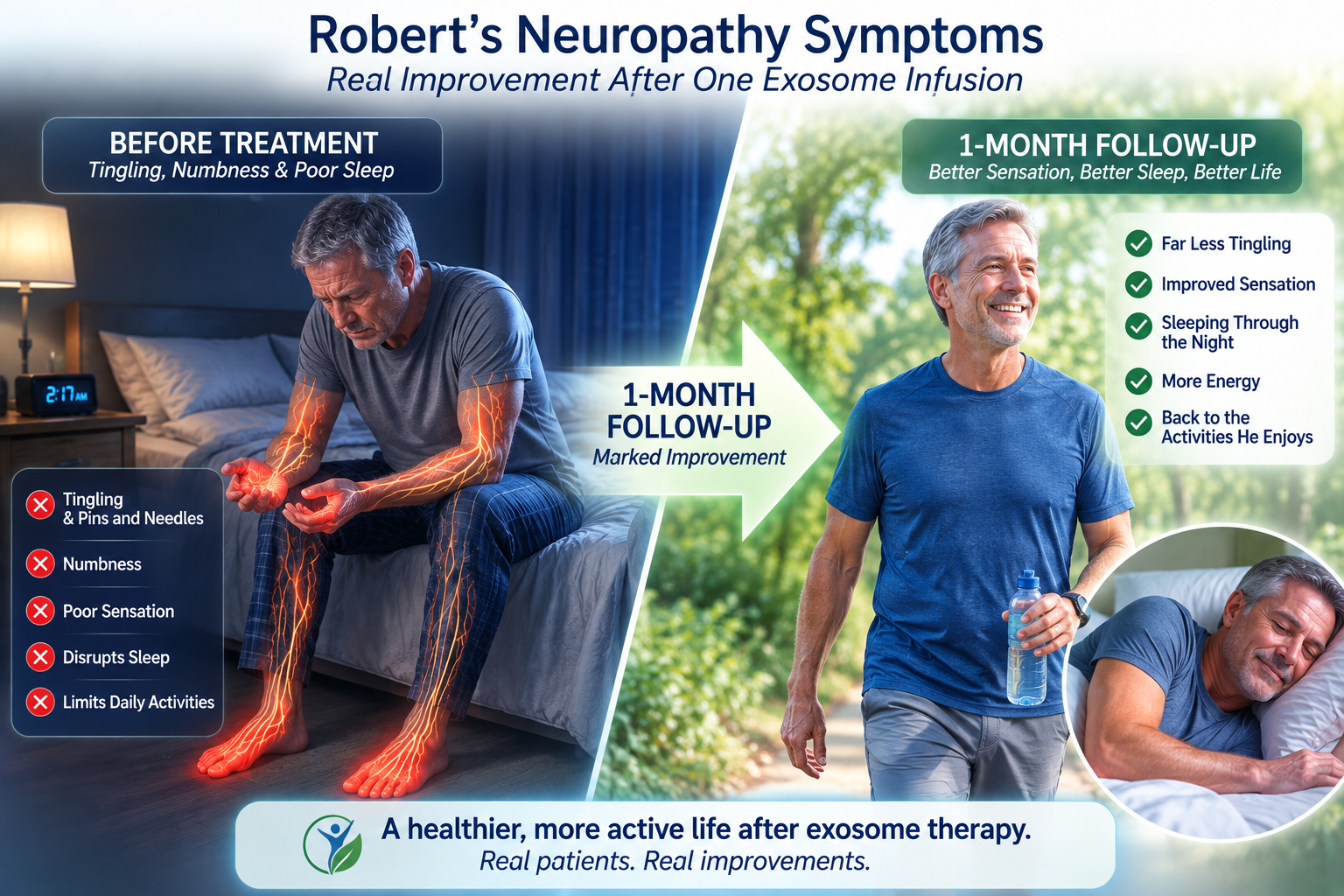 A before-and-after lifestyle graphic showing Robert experiencing disruptive tingling in his hands and feet before treatment compared with improved symptoms and quality of life at his one-month follow-up.
I find it very gratifying to help people like Robert to experience real improvements in their health.